Industry Insights
/
Apr 22, 2026
What Is a Deferred Submittal in Construction?
Deferred submittals cover complex systems approved post-permit — fire suppression, structural steel & glazing. Avoid costly compliance mistakes.

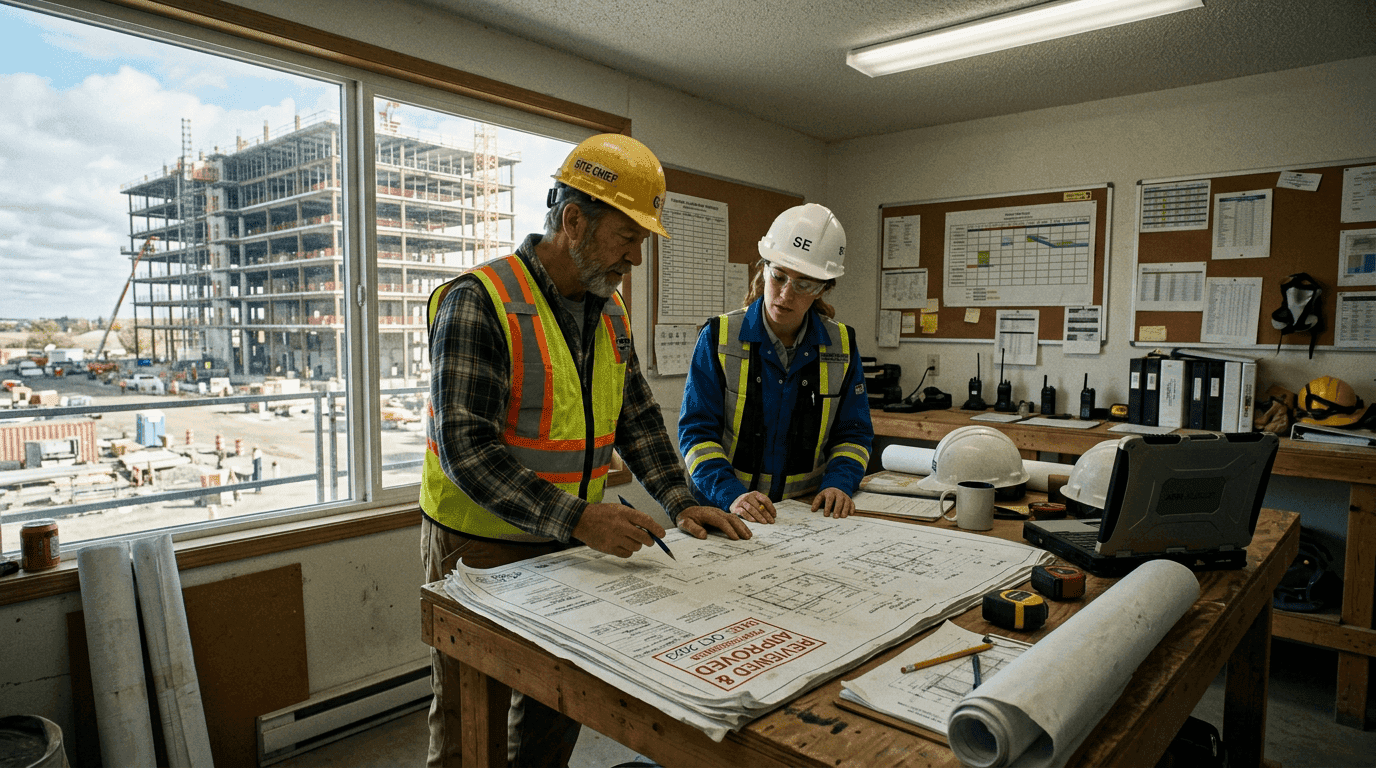
A deferred submittal is a portion of a construction project's design documentation not submitted at the time of the original permit application.
Instead, it's submitted to the building official within a specified period after the permit is issued. That's the International Building Code (IBC) definition. What it doesn't capture is the weight these submittals carry once a project is underway.
Deferred submittals show up on commercial construction projects for legitimate reasons. Certain systems and components involve specialized design that can't be completed during the initial planning phases because the engineering is fabricator-specific.
Fire protection systems, structural steel connections, curtain wall glazing. The subcontractor doing the work needs to be under contract before their engineers can finalize the documents. So construction starts, and those components follow a parallel approval track.
The deferral itself isn't the problem. The problem is what happens when those submittals arrive mid-construction phase, under schedule pressure, and the project team treats them like standard product data submittals. They're not.
This article covers what deferred submittals are, how the approval process works, and where the real risk sits for GCs, design team members, and their project engineers.
Why Some Design Elements Get Deferred
Design professionals defer certain components because completing the final design during initial project planning phases isn't possible until procurement happens. It's a recognized, code-permitted practice built into how complex construction projects are structured.
The engineering has to come from the fabricator
The most common driver is work that requires specialized design from the fabricator's own engineers. The glazing fabricator responsible for stamping a curtain wall system can't produce the structural documents until they're contracted and have determined the exact loading conditions.
The steel fabricator's engineers need to know the precise connection geometry before their design can be finalized. That level of specificity only becomes available once the subcontractor is selected and procurement is underway.
Deferring components lets construction start sooner
Requiring fully engineered items in the original permit set would delay permit issuance by weeks or months. Deferring those components lets construction start earlier while parallel design phases are completed.
When timelines are estimated and integrated accurately, this approach improves overall schedule efficiency. When planning is poor, the downstream delays can cascade across multiple construction phases.
Common Deferred Submittal Items
Most deferred submittal items share a defining trait: they involve specialized design, fabricator engineering, or third-party system design that can't be finalized in the permit set. Some of the most frequently deferred components on commercial construction projects include:
System or Component | Why It Gets Deferred |
Fire protection systems (sprinklers, standpipes, suppression systems) | The fire protection subcontractor produces hydraulic calculations and system drawings once the layout is determined. This work requires the contractor to be under contract first. |
Structural steel connections and pre-engineered metal framing | Connection details are delegated to the steel fabricator's engineer, who designs and stamps the drawings based on the structural engineer of record's loading criteria. |
Curtain wall and storefront glazing | The glazing fabricator's engineers handle wind load analysis, thermal performance, and anchorage design. These submittals can't be finalized until the fabricator is engaged and contracted. |
Pre-engineered wood trusses | One of the most widely documented examples of the deferred submittal process. Truss design drawings are produced by the manufacturer's engineer and listed as deferred items on the permit application. |
Elevator and escalator systems | Elevators are almost universally treated as deferred submittals and subject to their own dedicated permit review by the authority having jurisdiction (AHJ). |
Exterior maintenance equipment | Window washing systems and similar facade access equipment for high-rise projects require specialist engineering tied to the specific building geometry and facade system. |
Certain HVAC equipment configurations | Typically configurations where custom air handling systems involve delegated mechanical design beyond standard product data submittals. |
These aren't components the design team can fully specify in the permit documents. The detailed engineering follows procurement, and on certain types of complex projects, the list of deferred submittal items can be substantial.
Data centers are a common example, since liquid cooling and higher rack densities can reshape the mechanical design partway through the data center construction process.
How the Deferred Submittal Process Works
The deferred submittal process follows a defined sequence with multiple handoffs and responsible parties at each stage. Understanding what's required at each step is what keeps these submittals from becoming project liabilities.
Step 1: Documentation in the permit set
The registered design professional in responsible charge lists deferred submittal items on the construction documents before the owner submits for the building permit. Many jurisdictions also require them on the permit application itself. Items can't be informally pushed to a later track by the contractor. The building official needs to know which components will follow the separate permit review track.
Step 2: Fabricator or specialist engagement
Once the subcontractor or fabricator is under contract, their engineering team develops the design for the component being deferred.
For fire protection systems, that means hydraulic calculations and layout drawings. For structural steel connections or pre-engineered metal framing, it's the connection drawings stamped by the fabricator's structural engineer.
This delegated design work is what distinguishes deferred submittals from standard product data submittals.
A standard technical submittal proves an off-the-shelf product meets the spec, while a deferred submittal carries engineering that couldn't be finalized in the permit set.
Step 3: Engineer of record review
Before anything goes to the building official, the engineer of record reviews the deferred submittal documents and confirms they conform to the design of the building. That review is completed before the EOR forwards the package to the AHJ with a notation. Deferred items cannot be installed until this approval is received.
Step 4: AHJ review and approval
The building official reviews the deferred submittal and issues approval. Many AHJs have specific intake procedures and review timelines for these submittals. In busy markets, lead times can be substantial and need to be integrated into the project schedule from the beginning of the construction project.
AHJ review duration should be estimated conservatively, not assumed to be completed quickly, because revision cycles are common and their integration into the schedule determines whether the overall project stays on track.
Tom Port, the co-founder of BuildSync, when asked: "When a GC gets a deferred submittal back from the AHJ with comments, what are the most common reasons it triggers a revision cycle, and how much schedule time does that typically cost the project?", answers:
Most revision cycles happen because the submittal wasn’t fully checked against the project specs before it went upstream.
The AHJ is looking at code, but gaps in coordination, missing calculations, or spec mismatches are what trigger comments. Once that happens, you’re not losing a few days, you’re usually losing three to five weeks by the time it goes back through the EOR and the AHJ again.
Deferred Submittal vs. Shop Drawings: What's the Difference?
These two types of submittals get conflated regularly, and the confusion is understandable. Both involve submittals produced after the permit set. Both often originate from subcontractors or fabricators, with the subcontractor typically responsible for coordinating fabricator design.
But they operate under fundamentally different approval processes, and treating one like the other creates real problems for the design team, the GC, and ultimately the owner.
Deferred Submittal | Shop Drawing | |
What it is | Design documents requiring post-permit engineering and AHJ approval | Fabrication or installation drawings produced by a contractor or sub |
Who reviews it | Engineer of record, then the authority having jurisdiction | Design team (architect or engineer) only |
AHJ approval required? | Yes. Installation cannot proceed without it | No |
Permit connection | Listed on permit documents; subject to separate permit review | Not part of the permit process |
Common examples | Fire protection systems, structural steel connections, curtain wall glazing | Ductwork layout, reinforcing steel placement, millwork details |
The defining difference is AHJ involvement. Shop drawings go to the design team for review and comment. A deferred submittal must go through the engineer of record and then to the building official. That additional step adds time, adds a formal compliance review layer, and means installation cannot legally proceed until the AHJ grants approval.
It's also worth noting that not all delegated design ends up as a deferred submittal. Certain delegated design items (countertop support engineering, for example) require specialized engineering but don't necessarily require AHJ approval.
Whether something qualifies is a code and jurisdictional question. The distinction matters for how the contractor and design team structure the approval workflow and estimate the schedule impact on the project.
How Deferred Submittals Affect Your Project Schedule
This is where most construction projects feel the pain. Deferred submittals should appear on the project's submittal schedule from day one, with realistic lead times estimated for every handoff.
In practice, they often get added during planning with compressed timelines that assume everything goes right the first time. Every deferred submittal moves through five stages before installation can proceed:
Fabricator design > EOR review > AHJ submission > AHJ review > Approval
AHJ review timelines are rarely as short as teams assume
It rarely goes smoothly. AHJ review times aren't uniform. A building official in a high-volume market can take six to eight weeks on fire protection system submittals. Elevator submittals often have their own dedicated review queues with longer lead times. If the EOR has comments before the package reaches the AHJ, that revision cycle adds more time before the approval clock even starts. Those delays cost the project, and the owner absorbs them.
Long-lead equipment makes the risk worse
The risk compounds for long-lead equipment. A deferred submittal for a custom glazing system isn't just an approval timeline. It's also a fabrication and delivery schedule that can't start until the review is completed. If AHJ approval is delayed by four weeks, fabrication is eight weeks, and installation is on the critical path, the project faces a significant schedule hit before a single panel has been ordered.
What effective planning actually looks like
Effective planning treats deferred submittals as independent workstreams with their own milestones. Every deferred component on the construction project needs:
A responsible party
A submission date
An estimated AHJ review duration based on a conservative estimate
A deadline tied back to the construction phases that depend on it
The general contractor and subcontractor responsible for each component (whether a mechanical subcontractor, glazing sub, or steel fabricator) need to be aligned on those dates from the project start, not after procurement is completed.
The Review Risk Most Teams Underestimate
Most content about deferred submittals focuses on the permit approval process. That's important, but it's not where construction projects typically run into the most trouble. The more common problem is what happens to the technical review before the package reaches the EOR or the building official.
Deferred submittals are the most technically complex packages on a project
Deferred submittals often arrive during active construction phases, when the project team is managing field work, RFIs, owner-driven changes, and a backlog of concurrent submittal packages. And they tend to be the heaviest lifts:
A fire protection hydraulic calculation package
A curtain wall engineering report covering dozens of connection drawings
A structural steel connection package with delegated design documentation for a complex framing condition
Each requires serious technical review against the project's construction specifications and drawings before it goes upstream. These packages often sit at the intersection of multiple specification sections, and the reviewer is responsible for holding all of them simultaneously.
Jacob Delargy, PE at Monteith Construction, put it directly:
"BuildSync has helped us review multiple submittals against multiple specs that I would not have thought to reference during my own review process."
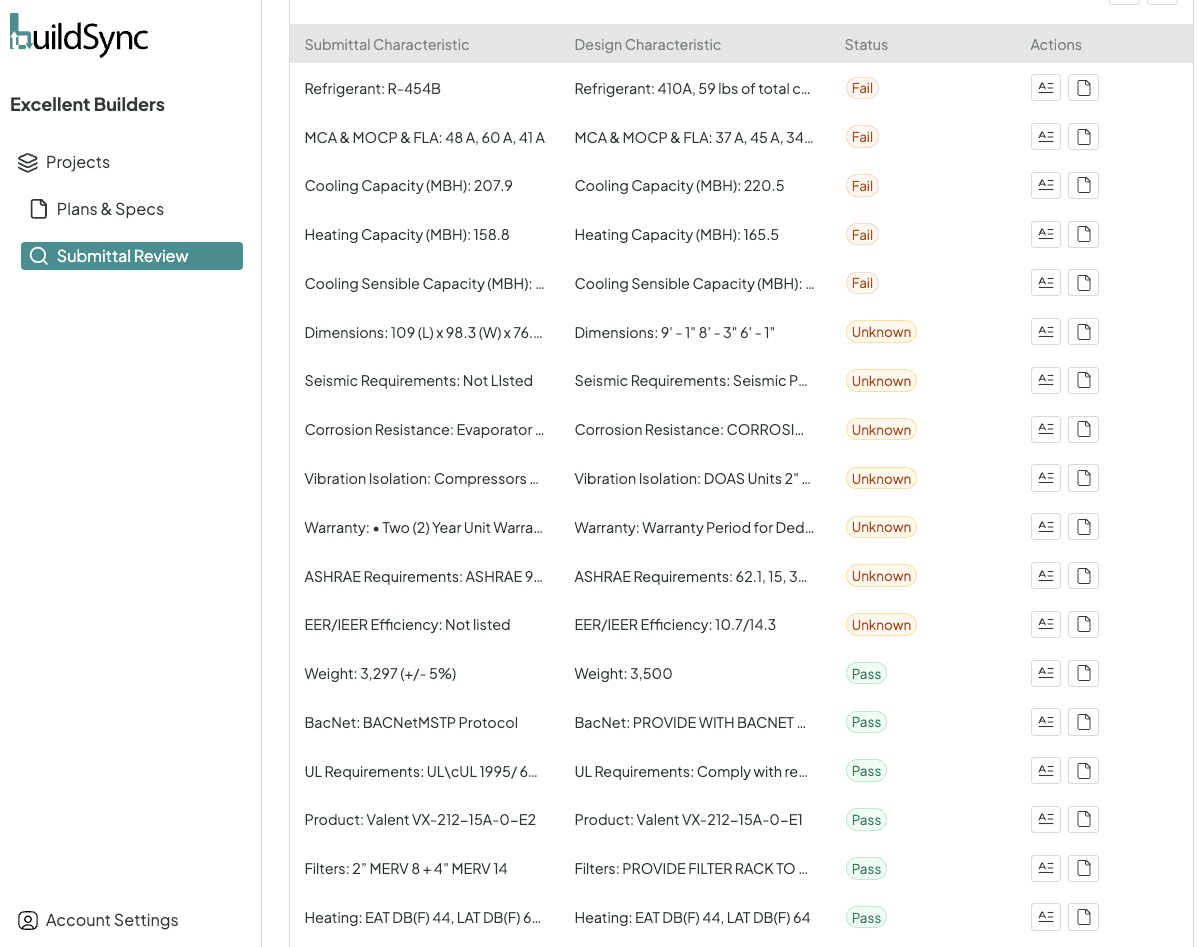
Three reviewers, three different jobs; and only one catches spec non-compliance
The permit process doesn't protect against spec non-compliance, and neither does the EOR review. Here's how the review responsibilities actually divide:
Reviewer | What they're checking |
AHJ (building official) | Code conformance |
Engineer of record | Compatibility with the building's structural and design intent |
GC / design team | Whether the submitted system meets the project's contractual specifications |
That third check is the one that catches non-compliant submittals before they cost weeks on the schedule. It belongs to the GC and design team, and it needs to happen before the package moves upstream.
For GC teams managing construction submittal review quality across a full project, deferred submittals represent a concentration of that risk. A non-compliant fire protection system submittal that passes through without a thorough review, reaches the EOR, gets forwarded to the AHJ, and gets rejected there restarts the entire approval clock.
When a Deferred Submittal Gets Rejected: Consequences and How to Get Ahead of Them
A rejected deferred submittal isn't just a paperwork problem. Because installation can't proceed until the building official approves that item, a rejection physically stops the work. For fire protection systems, rough-in inspections can't proceed. For curtain wall glazing, facade construction stalls. For elevators, both shaft work and equipment installation are on hold. These systems sit on or near the critical path on most commercial projects.
Each rejection adds a full revision cycle. The subcontractor revises the documents, the EOR reviews the updated package, the drawings get resubmitted, and the AHJ review clock restarts. In a busy jurisdiction that's three to five added weeks. The owner absorbs the consequences:
Schedule compression
Added costs
Disputes about who's responsible
The practical protection is a thorough GC review before the package moves to the EOR. That means verifying that the submitted system meets the project's construction specifications, not just general code requirements:
Fire protection: coverage and density against specified design criteria
Structural steel: connection details against material and load requirements in the drawings and specs
Glazing: thermal and structural performance against what the design team specified
Teams working from a construction submittal review checklist integrated into their standard process are more likely to catch spec non-conformances before they travel upstream. On complex packages with 40 or 50 technical characteristics across multiple specification sections, checklist discipline combined with deep technical analysis is what gives the GC and owner confidence before the package leaves the desk.
Want to see how BuildSync handles technically complex submittals before they reach your design team or the AHJ? Book a demo or start a free trial.
Frequently Asked Questions
Who is responsible for approving deferred submittals?
Responsibility is shared across three parties. The engineer of record reviews the deferred submittal documents first and must formally confirm they conform to the design of the building before forwarding to the authority having jurisdiction. The building official then issues approval. The GC is responsible for ensuring the submittal package is specification-compliant before it reaches the EOR, and for coordinating the submission process and timeline across the general contractor, subcontractor, design team, and EOR. Keeping the design team informed at each handoff is what prevents last-minute surprises. The owner of the project carries the ultimate schedule risk if the process isn't managed well. Installation can't proceed until the building official grants approval.
Can deferred submittals affect your project closeout?
How far in advance should deferred submittals be submitted to the AHJ?
Related reads for you
Discover more articles that align with your interests and keep exploring.


