Construction Technology & Innovation
/
Apr 8, 2026
Submittal Package Template: Free Download + Checklist
A submittal package template can save your team hours on every job. Here's what a solid one includes, where most mechanical subs fall short, and how to stop building packages from scratch.


Most mechanical subcontractors approach the submittal package the same way: pull last job's folder, swap the cover sheet, and send. It works; until it doesn't.
A missed product variant, a refrigerant mismatch buried on page 47, a warranty nowhere in the submittal. Two weeks later the rejection lands and the scramble starts.
The template itself isn't the problem. The problem is treating it like a filing exercise rather than a compliance exercise.
This guide covers what solid construction submittals actually require, where mechanical subs consistently fall short, and how project managers and project engineers can build packages that earn approval the first time.
What Is a Submittal Package in the Construction Submittal Process?
A submittal package is the formal collection of technical documentation that subs assemble to prove that proposed materials, products, or systems meet the project specifications. It moves from the sub to the general contractor for compliance review, then to the design team for final approval, before a single piece of equipment gets ordered or installed.
Construction submittals are the quality control checkpoint that keeps a construction project on schedule. For all project stakeholders, the general contractor, the design team, and the owner, getting them right early matters. If a submittal package doesn't satisfy the specs, the submittal gets rejected and the procurement clock stops. On long-lead MEP equipment, that delay cascades quickly across a schedule that was already tight.
Construction submittals for mechanical work are organized under CSI MasterFormat spec sections, primarily Division 23 for HVAC and Division 22 for plumbing. Each specification spells out what subcontractors must include: cut sheets, drawings, certifications, and project-specific items.
The submittal package is the contractor's documented response to those requirements.
What Goes Into a Construction Submittal Form? The Core Components
A complete submittal package contains more than cut sheets. Below is what's typically required, and what reviewers on both the general contractor and design team sides expect to see organized and ready to evaluate.
Component | What It Contains | Common Miss |
Construction Submittal Form | Project name, project ID, spec section, submittal type, resubmittal designation, responsible party, contractor certification of review | Sending without contractor sign-off; the GC has no confirmation the sub actually reviewed it |
Product Data Sheets | Manufacturer cut sheets showing the exact model proposed, with each equipment tag mapped to specific pages and selections | Generic family brochure covering 12 variants with no tag-level mapping; leaves the reviewer guessing |
Shop Drawings | Ductwork layouts, custom fabrications, control schematics, where required by Part 1 General of the specification | Assuming drawings aren't required without checking the spec; omitting them makes the package incomplete by definition |
Certifications and Test Reports | AHRI ratings, UL listings, seismic certifications, energy efficiency documentation; varies by spec and project type | Skipping certifications on healthcare or education projects where requirements are heavier than standard commercial |
Spare Parts and Attic Stock | Required spare fan belts, filters, and maintenance materials as specified; documented in the submittal, not assumed | Leaving it out entirely; surfaces at project closeout when the owner withholds retention |
Spec Compliance Cross-Reference | A matrix mapping proposed materials against the spec's technical requirements, with each characteristic verified | Treating it as optional; packages that show their work get reviewed faster and move ahead of ones that don't |
Free Construction Submittal Template (Download)
The free construction submittal template below is organized to match the structure above. It includes a transmittal cover with fields for project name, project ID, submittal type, and dates received and date returned; a cut-sheet checklist by component type; a certifications tracker; and a spec compliance cross-reference section.
Download your submittal package template here.
Run through it before the package leaves your desk, not after it comes back rejected.
Where Subcontractors Get Construction Submittals Wrong
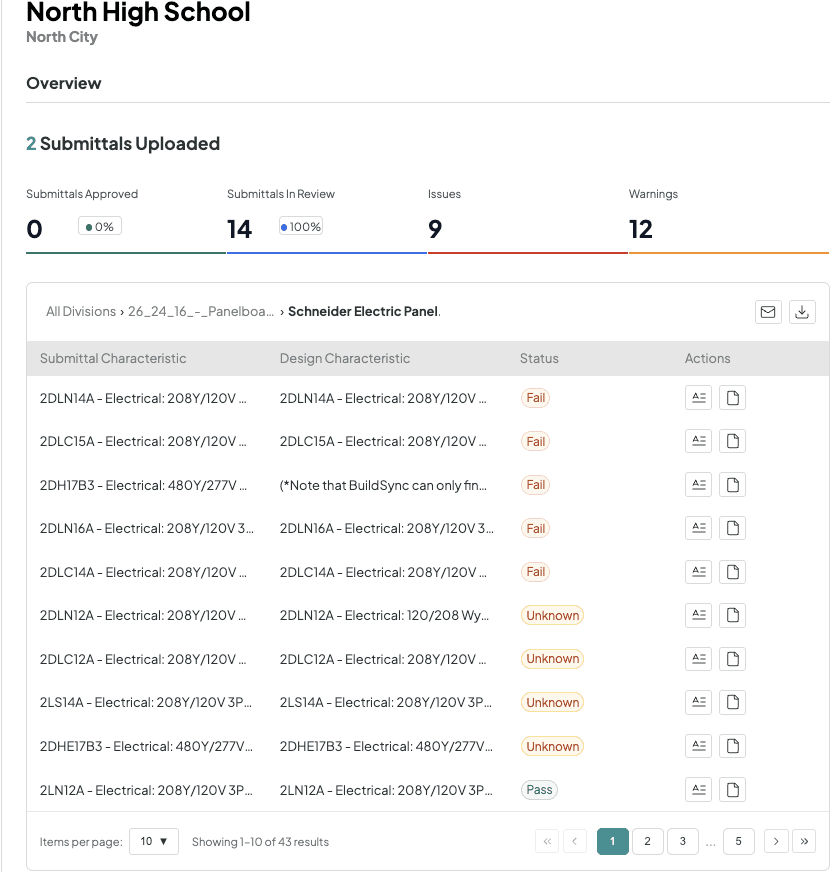
After running thousands of construction submittals through AI-powered review, the failure patterns on mechanical packages aren't random.
The same issues surface on construction project after construction project, not because subs don't know better, but because these details are genuinely easy to miss inside a 60-page cut sheet under startup-phase pressure.
Incomplete cut sheets for multi-configuration equipment
VAV boxes, fan coil units, and air handlers often cover an entire tag schedule in one submittal. A cut sheet that says "see schedule" without mapping each tag to a specific model variant and page number will get flagged. The reviewer can't verify approval against something undefined.
Refrigerant and equipment spec mismatches
On HVAC equipment, the refrigerant type is a spec requirement, not a manufacturer default. R-454B on a submittal when the spec calls for R-410A is an outright failure; buried deep enough in a cut sheet that it gets missed on a quick pass.
By the time the equipment arrives on site with the wrong refrigerant spec, the cost is no longer measured in review time.
Missing spare parts and attic stock documentation
Specs routinely require spare fan belts, filter sets, and other maintenance materials as part of construction submittals. When these aren't documented, the issue surfaces at project closeout, and at that point, the owner can tie it to retention. Getting it right in the submittal means it never becomes a dispute.
Warranty terms left undocumented
If the spec calls for a 10-year warranty from date of substantial completion and the submittal doesn't address it, that's flagged as unknown, not a pass.
An unresolved unknown is a conversation that needs to happen before the design team sees the package. Resolve it before the submittal goes out for review.
How to Build Construction Submittals That Pass the First Time
Building a compliant submittal isn't about working harder, it's about working in the right sequence. Here's the process that consistently produces first-time approval across construction projects.
Read the spec before you pull manufacturer data
Part 1 General of each specification lists every submittal type required and any project requirements beyond standard cut sheets. That list drives the package, not the manufacturer's catalog.
Organize by equipment tag, not by document type
Project managers reviewing complex construction submittals need to match tagged materials to a specific tag in the schedule. A package organized by manufacturer turns that review into a scavenger hunt, and compliance errors get missed.
Cross-reference technical characteristics before the submittal goes out
Refrigerant type, efficiency ratings, coil coatings, motor specs - pull each against the spec before the package leaves your desk. These are the points of failure that reviewed construction submittals consistently surface, and catching them before submission is where pass rates improve.
Include a compliance sheet
A simple table mapping spec requirements to submittal pages shows the general contractor that the work was reviewed before it arrived. It builds credibility, speeds up the approval cycle, and reduces the back-and-forth that eats into procurement timelines.
Tie your submittal to a schedule
HVAC equipment on commercial construction projects can carry 16–24 week lead times. Pair your submittal package process with a solid construction submittal schedule to stay ahead of procurement deadlines.
What General Contractors Are Actually Checking in the Submittal Review
A GC's review of construction submittals isn't a page count. It's a technical compliance check: does each product's documented characteristics match what the specification requires? That means pulling specific values; refrigerant type, BTU capacity, efficiency ratings, coil materials, and comparing them against the project specs, line by line.
For a 60-page air handler submittal, that process can take hours. What subs send directly determines how much time project managers spend finding problems. A well-organized submittal with a compliance cross-reference gets reviewed faster. A disorganized one gets scrutinized longer, and any ambiguity is more likely to result in a rejected submittal than a phone call.
Tom Port, the co-founder of BuildSync, says:
"As AI review becomes more common, ‘complete and compliant’ now means every requirement is explicitly identified, mapped, and verified against the specification.
We’re seeing more issues being surfaced at review, leaving far less room for assumptions or missed details on the subcontractor’s side."
The bar is rising. General contractors using AI review are catching construction submittal issues that previously slipped through; fin direction on a grilles submission, a missing attic stock requirement, a light transmittance value slightly below the minimum threshold. The packages that hold up under that level of scrutiny are the ones built with the same rigor the review applies.
The Submittal Log Template and Tracking Construction Submittals
A submittal log template and a submittal package serve different roles. The submittal log template is the project-level tracking tool that project managers use to monitor every construction submittal across the job. It records submittal statuses, dates received, date returned, who owns each submittal item, and who currently has it in court; managing the submittal process so nothing goes quiet.
A well-structured submittal log template captures the project ID and spec section, the sub responsible for each package, dates received, and current status, pending, approved, revise and resubmit, or rejected.
For project managers handling large construction projects with 500 to 2,000 construction submittals, the submittal log template is what prevents critical-path items from going quiet.
For teams managing construction submittals in Procore, BuildSync's integration automatically updates each submittal status as packages are reviewed; so teams aren't manually reconciling the submittal log template against a separate system.
The submittal log template stays current without manual upkeep. See how teams use AI-powered submittal review to keep the submittal process moving on complex construction projects.
Mechanical Construction Submittal Checklist
Use this checklist before any mechanical submittal leaves your desk. It covers the core submittal types and applies to most commercial HVAC and plumbing construction submittals.
Construction Submittal Form
Project name, project ID, and specification reference
Submittal number, submittal type, and resubmittal designation (if applicable)
Responsible party for submission clearly identified
Subcontractors' certification of review prior to submission
Date submitted and contact information
Cut Sheets and Materials
Manufacturer cut sheets showing exact model being proposed
Each equipment tag mapped to a specific page and selection
Refrigerant type confirmed against project specification
Efficiency ratings documented (SEER, EER, AFUE as applicable)
Coil coatings, surfaces, and finishes confirmed against spec
Certifications and Technical Drawings
Fabrication drawings included where required by the specification
AHRI certification (where required for HVAC equipment)
UL listing documentation (where specified)
Seismic certification (where required by project jurisdiction)
Energy Star or other certifications listed in specification
Spare Parts and Attic Stock
Specification checked for spare parts requirements
Required spare parts listed and confirmed (belts, filters, etc.)
Attic stock quantities confirmed per spec requirements
Spec Compliance Cross-Reference
Compliance matrix mapping spec requirements to submittal pages completed
Any items listed as N/A explained in writing
Package reviewed by a second set of eyes before transmission to the general contractor
Find the above checklist in our Submittal Package + Checklist Template.
When the Construction Submittal Template Isn't Enough
A template solves the organization problem. It doesn't solve the compliance problem.
Knowing what to include in a submittal is different from knowing whether what you've included actually meets the spec. That gap between a complete package and a compliant one is where most rejections originate. The missing filter requirement, the refrigerant discrepancy, the coil coating that wasn't confirmed for the construction project's environment.
These aren't filing errors. They're technical review gaps that cost real money when equipment arrives on site out of spec.
Jacob Delargy, a Project Engineer at Monteith Construction, put it directly:
"BuildSync has helped us review multiple submittals against multiple specs that I would not have thought to reference during my own review process."
That cross-reference gap, construction submittals reviewed against spec sections the reviewer didn't know applied, is where packages quietly fail before they go out. Read the full Monteith Construction case study to see how their team addressed this.
The template gets the package organized. The compliance review is what gets it approved.
How BuildSync Helps Subcontractors Build Construction Submittals That Get Approved
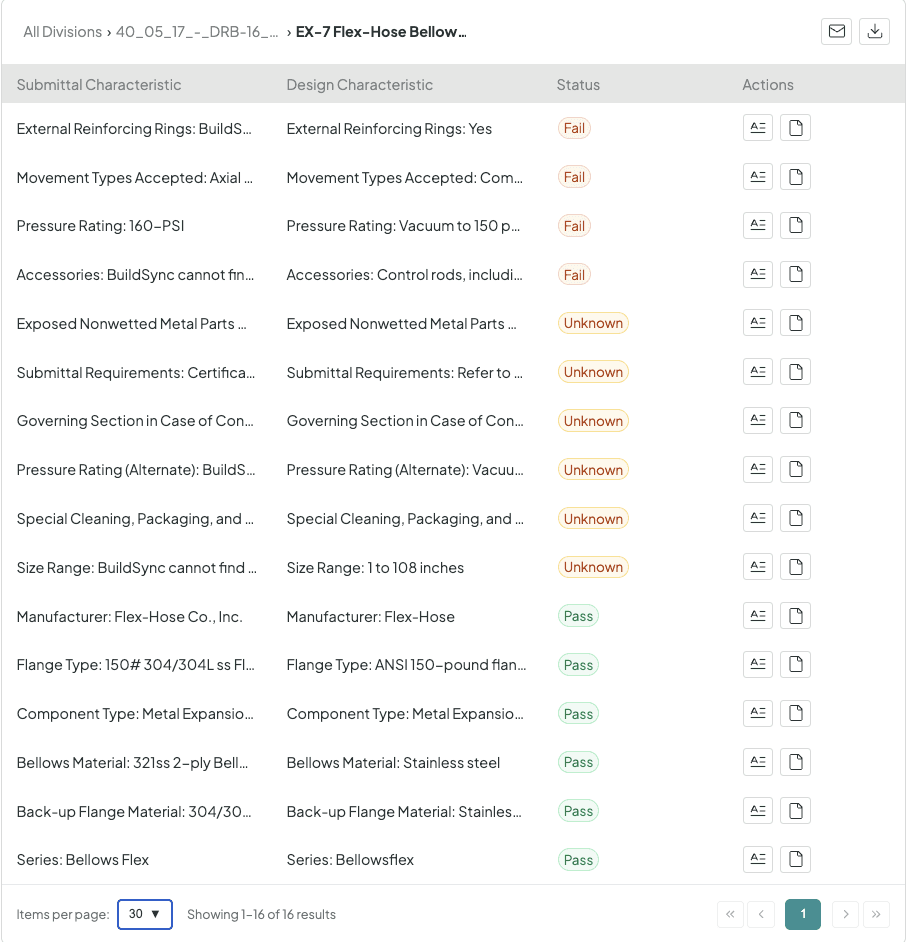
BuildSync's AI-powered submittal review does what a template can't: it reads the project specifications, extracts every technical requirement, and checks each one against the proposed materials in the submittal. Refrigerant type. Efficiency rating. Coil coating. Warranty terms.
Every characteristic gets a clear pass, fail, or unknown status, so every stakeholder knows exactly what needs to be resolved before the submittal goes out for approval.
For teams building packages before submission, that analysis surfaces compliance gaps before the GC ever sees the construction submittal. Fewer rejected construction submittals, faster approval on the ones that go out, and procurement timelines that hold across the construction project.
BuildSync is also developing submittal package generation for mechanical subs, currently in beta for Division 23. The feature pulls requirements directly from specs and builds out a compliant package framework, so the starting point isn't a blank template but a document already structured around this construction project's actual needs, cutting the time it takes to get each submittal into review.
When asked about the most consistent feedback from mechanical subs that used the package generation feature in BuildSync, Tom says:
"The consistent feedback is fewer resubmittals and significant time savings. By letting AI do the heavy lifting against the spec upfront, teams are submitting more complete packages and avoiding the back-and-forth later."
Try BuildSync free on your next mechanical submittal.
Frequently Asked Questions
Does a submittal package need to include shop drawings?
It depends on the submittal type the specification requires. Most Division 23 construction submittals don't require shop drawings, cut sheets and certifications are sufficient. But equipment with custom configurations, built-up systems, or complex controls integration often carries a drawings requirement. Check the Submittals article in Part 1 General. If drawings are listed as a required submittal type, sending the package without them means it's incomplete regardless of how thorough the cut sheets are.
How do you organize a submittal package when multiple equipment tags share the same submittal form?
What's the difference between a submittal package and a submittal log?
How long should a GC's review of a mechanical submittal package take?
Related reads for you
Discover more articles that align with your interests and keep exploring.


