Construction Technology & Innovation
/
Aug 3, 2026
Electrical Submittal Package: A Step-by-Step Assembly Guide
How electrical subcontractors gather cut sheets, calculations, and certifications into a submittal package that clears GC and design team review.


An electrical submittal package can look finished and still come back rejected. Every cut sheet is there. The shop drawings are attached. The cover sheet lists every division. Then the design team sends it back because one fixture type was missing its lens option, or a panelboard's short-circuit current rating never matched the available fault current. The documents were complete. The compliance was not.
That gap is the whole challenge in Division 26. Electrical submittals carry more individual technical characteristics per package than almost any other division, and they hide many of those characteristics behind shared documents.
This guide walks through how electrical contractors assemble a construction submittal that clears general contractor and design team approval the first time, working from the project specifications down to the tag.
What goes into an electrical submittal package?
The package is the set of documents that proves the products you plan to install meet the project specifications. For most Division 26 scopes, that means:
Product data sheets and cut sheets for each product
Shop drawings, where the spec calls for them
Panel and fixture schedules
Control or sequence-of-operations narratives
Required certifications and warranty documentation
A cover sheet or transmittal tagged to the right spec section
Every item earns its place because a line in the project requirements asks for it. Product certifications confirm the equipment meets applicable codes, and a UL product listing is one of the most common certifications an electrical spec requires.
Depending on project scope and project size, some sections also ask for material samples, physical examples of finishes, installation instructions, and product documentation, so read the submittal schedule to see which required submittals apply and when they are due.
Getting each package tagged to the correct Division 26 spec section matters as much as the product specifications inside it, because a mis-tagged submittal stalls the approval process before anyone reads the first product data sheet.
The CSI MasterFormat numbering is the shared language for that tagging, and a submittal aligned to it moves through the submittal process faster. Strong document management keeps the necessary documents and design documents together, so preparing submittals this way means the documents submitted match the technical specifications the design team and project owner expect.
Why a complete construction submittal and a compliant one are different things
Here is what makes electrical work different. A single product data sheet often covers many tagged items. One lighting cut sheet can describe 15 to 80 fixture types. One panel schedule spans every panel on the floor. So a submittal package can hold every relevant document and still fail, because the reviewer checks compliance per tag, and one tag's requirement slipped through.
The classic example is a fixture schedule that calls for a frosted lens on fixture type SK4. The cut sheet includes the lens as an option, but the option was never selected for SK4. The document is present. The characteristic is wrong. Assemble the construction submittal document by document and that miss stays invisible. Assemble it tag by characteristic and it surfaces before the package leaves your office.
When asked what actually causes electrical submittals to be rejected despite having complete cut sheets, Tom Port, the co-founder of BuildSync, says:
The problem often isn't the missing cut sheets.
It's missing compliance. One incorrect lens option, SCCR, or voltage rating is enough to send the entire package back, even if every document is included.
How to create a submittal package tag by characteristic
Pull requirements from the project specifications first
Start with the spec before the product catalog. Read the relevant Division 26 sections and list every required characteristic per equipment type: voltage, phase, short circuit current rating, FLA, MCA, MOP, KVA, impedance, temperature rise, photometrics, lens type, dimming protocol, and listing. That list of project requirements becomes your checklist for the whole submittal package and for the submittal process that follows.
Match every tag to its product data sheet
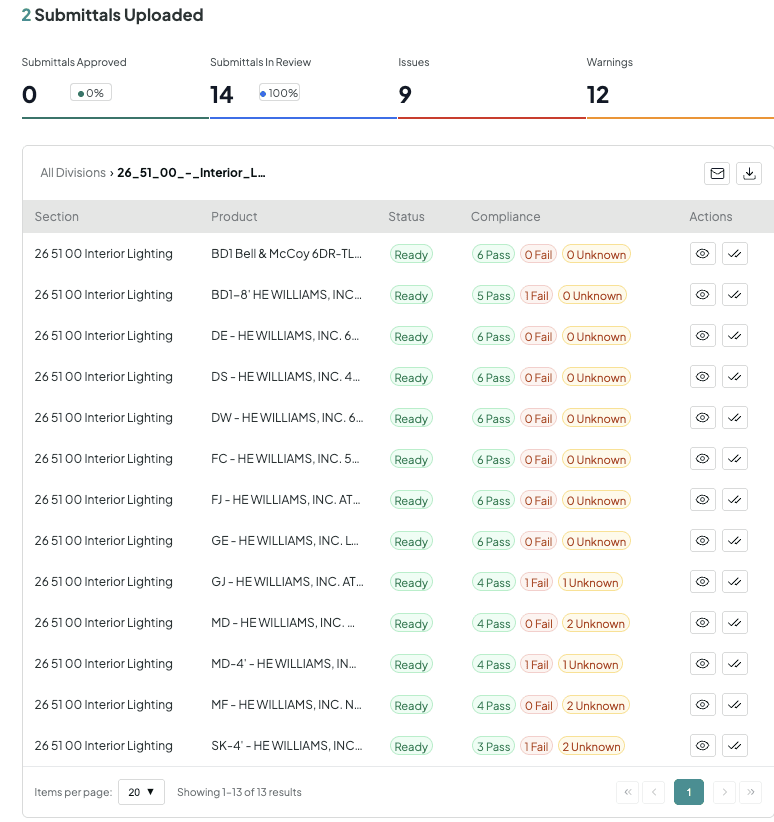
Break the shared documents down to the tag level. For each fixture tag, panel, and transformer, confirm the data sheet covers that tag and shows the required options selected. This step catches the one-sheet-many-tags trap that sends so many electrical submittals back.
Prove each required characteristic on the data sheets
Highlight each required value on the product data sheets so the reviewer finds it fast. A compliance matrix that maps each spec requirement to its page in the technical data removes guesswork from the review process and shortens the thorough review the design team has to perform. Add detailed instructions where a product's intended application is not obvious.
Build a cover sheet that maps the package
A clear cover sheet, transmittal, and cover letters give the reviewer a map of the package: which specification each product answers to, which submittal number it carries, and where each relevant document sits. Group the submittal package sections so relevant documents sit together, and reviewers process organized submittal documents faster.
Confirm certifications, warranties, and attic stock
Check the certifications, warranty terms, and any spare parts or extra materials the spec calls for. These get missed under deadline and turn into closeout disputes and costly mistakes later, long after the correct materials should have been ordered.
Log every package to its spec section
Record each package in the submittal log with its section number and submittal number before it goes out. A clean submittal log keeps the whole submittal workflow legible for the project team, supports quality control, and speeds the GC's review.
Common submittal gaps that get electrical submittals flagged in design team review
The electrical submittals that come back most often cluster by equipment type.
Equipment or submittal type | Characteristics to verify | Why it gets flagged |
Panelboards and switchboards | SCCR, voltage, phase | SCCR below available fault current, or voltage/phase off the panel schedule |
Motors and connected loads | FLA, MCA, MOP | Conflicts with the panel schedule |
Transformers | KVA, impedance, efficiency, temperature rise | One required rating missing or below spec |
Lighting fixtures | Lens type, photometrics | Lens option not selected per tag, or output not checked against the minimum |
Controls and BAS | Sequence-of-operations narrative | Control narrative omitted |
Cross-check the actual submittals and shop drawings against the project drawings and specifications, and you pre-empt most of the design team's comments earlier in the submittal process. A wrong SCCR or a voltage conflict creates field coordination problems that cost real time and money after approval, which is exactly what a thorough review is meant to catch. Confirming performance data and applicable codes early helps ensure compliance with the design intent before the package ships.
When asked which electrical characteristic is most commonly missed during submittal assembly, and why it's so easy to overlook under tight deadlines, Tom Port, the co-founder of BuildSync, says:
Time pressure changes how people review submittals. They check whether the documents are there instead of whether every required characteristic has been verified, and that's where the mistakes happen.
How do electrical contractors review the package before it reaches the general contractor?
Subs who self-check the package before submitting see fewer rejections and faster approvals. The math is simple. Each rejected submittal costs an average of $805 and adds 2 or more weeks to the timeline, so catching one gap in your own office pays for itself immediately and protects successful project delivery. Electrical contractors and other specialty contractors who build this habit keep projects running on schedule.
What the construction manager will check first
The GC's construction manager checks completeness, correct products for correct locations, coordination with other trades against the project requirements, and the transmittal before applying a review stamp early in the submittal process. A package that already reads clean gets processed first in the approval process.
On most construction projects, the project manager is typically responsible for coordinating the submittal process with multiple stakeholders, and clear relevant information up front keeps all parties involved aligned on contract requirements. Construction is built on relationships, and sending strong packages tells the project owner and the project team you know the work.
When asked how self-checking submittal packages changes a subcontractor's relationship with the GC and design team, compared to simply submitting and hoping for approval, Tom Port, the co-founder of BuildSync, says:
When you stop sending packages that 'might be right' and start sending packages you've already verified, the relationship becomes far more collaborative. Everyone spends less time chasing corrections and more time keeping the project moving
Request a demo. See how BuildSync checks an electrical submittal package against the specs.
When manual assembly of construction submittal packages can't keep up
Doing all of this by hand works until volume and deadlines collide. A single electrical package can carry dozens of tags and hundreds of characteristics, and cross-referencing each one against a 50-page spec by hand is where the submittal process breaks down for a busy project team. A single miss can force a new submittal and restart the entire process.
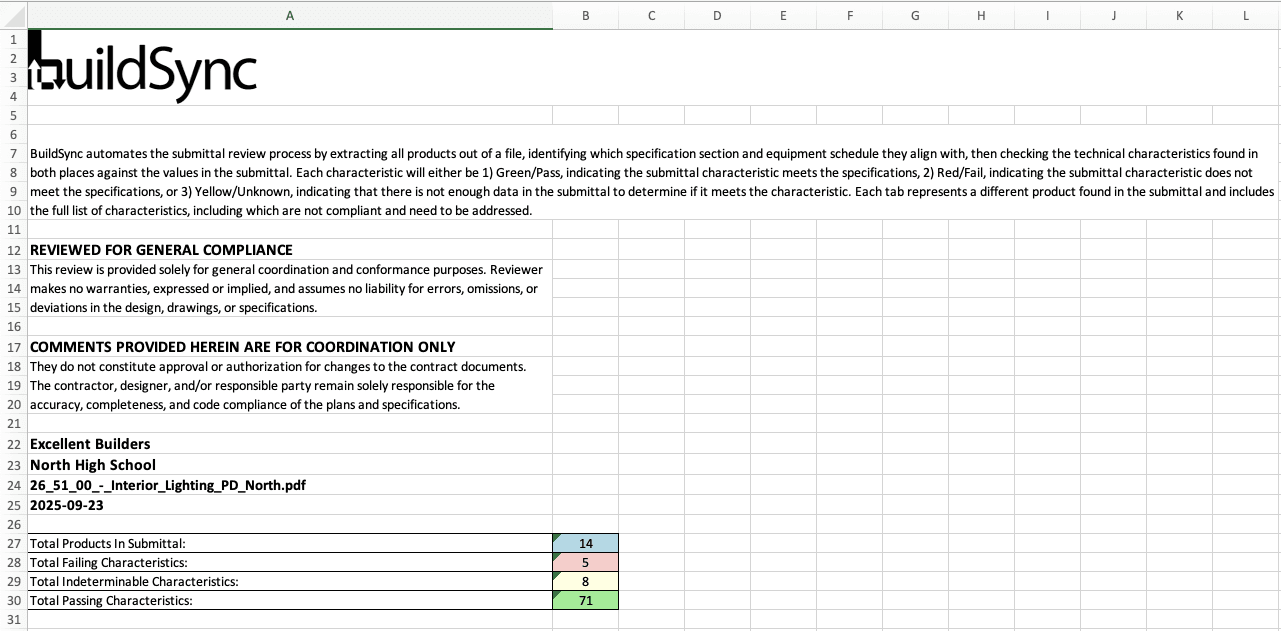
This is the point where teams look at AI, and skepticism there is reasonable. You want to see it work on your own projects before you trust it. BuildSync performs deep technical analysis on electrical submittals, extracting every characteristic from the product data and checking each one against the project specifications, then showing the source page for each so you can verify the call yourself.
For a closer look at how AI actually builds a submittal package from your specs before it ever reaches review, this breaks down the extraction and matching process step by step.
Complete, well-ordered technical documentation and necessary documentation move the construction process toward final approval instead of another revision, and it helps ensure compliance across the whole package. For subcontractors, BuildSync can generate and check construction submittal packages so the package that reaches the GC is already compliant per tag. Before diving into the electrical-specific steps, a real submittal package example shows the sections and structure that carry across every trade.
Some subs weigh that against outsourcing submittal package prep to a third-party firm instead, though that route trades away speed and spec control for a per-package fee.
Faster approvals across your construction projects
The goal of construction projects is a package that clears the first time. Assembling tags by characteristic gets you most of the way, and checking every characteristic against the spec closes the remaining gap in the submittal review. Done well, it reflects the standard the construction industry expects and shows project stakeholders and every reviewer that construction activities and the RFI process are handled with the same rigor as the field work.
Ready to cut your electrical rejection rate? Book a demo or contact BuildSync.
Frequently asked questions about electrical submittal packages
What is the submittal review process for electrical engineers?
The electrical engineer on the design team reviews the submittal against the contract documents, checking each product's technical data against the specifications, confirming approved manufacturers, and verifying code compliance. They mark the submittal approved, approved as noted, or revise and resubmit, then return it through the GC. Typical turnaround runs 2 to 4 weeks, and longer when the design team is backlogged.
How does an electrical package differ from a mechanical submittal package?
Who prepares the electrical submittal package?
Related reads for you
Discover more articles that align with your interests and keep exploring.


